Tuesday, March 29, 2011

Bluewater Classic


The Sydney to Hobart Yacht Race
Referred to as the 'Bluewater Classic'  is hosted by the Cruising Yacht Club of Australia, starting in Sydney, Australia onBoxing Day and finishing in Hobart. The race distance is approximately 630 nautical miles (1,170 km). The race is run in co-operation with the Royal Yacht Club of Tasmania, and is widely considered to be one of the most difficult yacht races in the world.

The longest surviving skipper from the inaugural race, Peter Luke, who contributed to the formation of the Cruising Yacht Club of Australia and the establishment of the Sydney to Hobart Yacht Race.


Bass Strait, and the waters of the Pacific Ocean immediately to its east, are renowned for their high winds and difficult seas. Even though the race is held in the Australian summer, "southerly buster" storms often make the Sydney-Hobart race cold, bumpy, and very challenging for the crew. It is typical for a considerable number of yachts to retire, often at Eden on the New South Wales south coast, the last sheltered harbour before the Bass Strait crossing.


Women's involvement.....


Women first participated in the race in 1946. The first woman to take part was Jane Tate, whose boat Active was the only one to reach Hobart in 1946. Dagmar O'Brien, with boat Connella, also took part this year but retired from the race before finishing. Thus, the Jane Tate Memorial Trophy is awarded each year to the first female skipper to complete the race.
In total, over a thousand women have taken part in the race.


Tuesday, March 22, 2011

7 dont's after a meal


*     Don't eat fruits immediately - Immediately eating fruits
 after meals will cause stomach to be bloated with air.
 Therefore take fruit 1-2 hr after meal or 1hr before meal.


*   Don't drink tea - Because tea leaves contain a high

 content of acid. This substance will cause the Protein
 content in the food we consume to be hardened thus 
difficult to digest.           


*     Don't loosen your belt - Loosening the belt after a meal

 will easily cause the intestine to be twisted & blocked.   


*     Don't bathe - Bathing will cause the increase of 

blood flow to the hands, legs & body thus the amount
 of blood around the stomach will therefore decrease. 
 This will weaken the digestive system in our stomach.               
                                                                                                                    
*     Don't walk about - People always say that after a meal walk

 a hundred steps and you will live till 99. In actual fact this is not true.
 Walking will cause the digestive system to be unable to absorb the 
nutrition from the food we intake.                               
                                                                                  
*     Don't sleep immediately - The food we intake will not be able 

to digest properly. Thus will lead to gastric & infection in our intestine.   

SNOW LEOPARD

fritzPolkingSmallWildSL (576×382)


smallMountainGaze (576×380)


Party Cat


fourCats3.9.jpg


cea3aabc-17ae-434d-85f0-752d3a0bbf7e.jpg (360×512)


“(The snow) leopard is a strong, powerful, fast and beautiful animal. Leopard species 
had been destroyed around here but now they are being regenerated. If the Olympic 
project, at least in some way, should help the local environment, then it 
(picking a leopard) would be symbolic.”

 Russian Prime Minister Vladimir Putin got his wish when a snow leopard, polar bear
 and hare were chosen as the official mascots of the 2014 Sochi Winter Olympics on Saturday.
Putin, who was largely responsible for Sochi’s successful bid to host the 2014 Games,
 said earlier in the day that a snow leopard would be his “symbolic choice.”
The snow leopard received 28 percent of the votes during a live broadcast on Russia’s main
 Channel One, followed by the polar bear in second place with 18 percent and the hare in third
 (16 percent).
“There are three mascots for the Olympic Winter Games, representing the three places on
 the Olympic podium,” Sochi 2014 chief Dmitry Chernyshenko said in a statement.
“All top-three characters will become the Olympic Winter Games mascots. 
The mascots are the choice of our whole country and will remain in the history of the Olympic movement.”
Television viewers voted for the mascots from a pool of 10 candidates including a Russian bear
 and Grandfather Frost (Russian Santa Claus) by sending text messages or by calling the studio.


Trap camera photo


Photo by Katia Faurie (Large)


Cub Birthday


Saturday, March 19, 2011

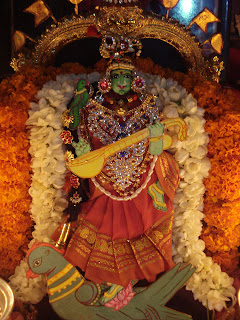
Sri Rajamathangi


Raja Mathangi Ambika is the most important Goddess of Shakthi universe. The enclosed article explains the fundamental meaning and activity of Raja Mathangi. Our Divine Mother Parashakthi Karumariamman as the supreme divine consciousness is manifest in the physical realm both universally and within us as Raja Mathangi, Who is considered as a supreme advisor to Raja Rajeshwari.


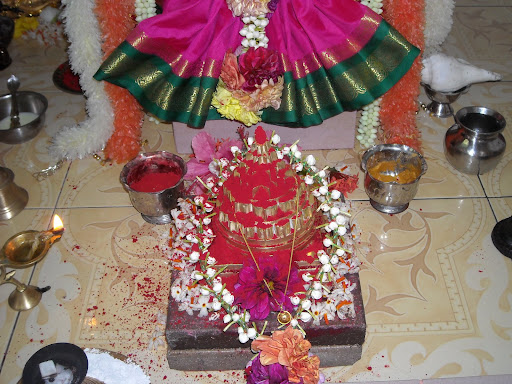
The installation of Maha Meru – the 3 dimensional representation of Sri Chakra/Sri Vidhya in our Temple, transforms Parashakthi Karumariamman to Raja Rajeshwari-Lalitha Thirupurasundari.


World Water Day

SDC12626.JPG (1600×1200)


World Water Day is observed on March 22 since 1993 when the 
United Nations General Assembly declared March 22 as World Day for Water[
This day was first formally proposed in Agenda 21 of the 1992 United Nations 
Conference on Environment and Development (UNCED) in Rio de Janeiro,Brazil.
Observance began in 1993 and has grown significantly ever since.
The UN and its member nations devote this day to implementing UN 
recommendations and promoting concrete activities within their countries
 regarding the world's water resources. Each year, one of various UN agencies


involved in water issues takes the lead in promoting and coordinating international 
activities for World Water Day. Since its inception in 2003, UN-Water has been 
responsible for selecting the theme, messages and lead UN agency for the World Day for Water.
UN_General_Assembly_hall.jpg (3072×1905)

Tuesday, March 15, 2011

Jenolan Caves:

Take a break from your world and visit the timeless seclusion of Jenolan Caves, where the beauty above and below ground are inspirational.

Underworld Exploration: Being underground draws on senses that you may not have experienced before. Imagine a maze of ancient limestone tunnels, subterranean rivers, and caverns richly draped with exotic mineral deposits. 

Aborigines first named the area Binnomea or Dark Places. By the 1830s European settlers started to explore the caves. Over 40kms of multi-level passageways have now been discovered beneath its mantle of eucalypt forest.

By the 1860s, many other explorers had followed Whalan's lead and found even more caves. Word of their remarkable discoveries spread and the JenolanCaves became a popular tourist destination. 


Unfortunately, some of those first visitors took "souvenirs" home with them and evidence of their destruction can still be seen. Thanks to local Parliamentarian John Lucas, after whom a cave has been named, the practice of breaking off stalagmites and stalagtites was made illegal in 1872. Since then, damage has been minimal.


Over 250,000 visitors come to explore the JenolanCaves each year.

Located between Bathhurst and Katoomba on the far Western edge of the Blue Mountains, JenolanCaves is one of Australia's premier country tourist destinations.


.

Sunday, March 13, 2011

Alarm Sounds on Bee-Killing Pesticides


Belgium, Switzerland and Spain called for a ban on insecticides based on fipronil 
 intimidation.The director of the Belgian center for apiculture information, Etienne Bruneau, said,
 "At the current rate, in 10 years there will be no more bees in Belgium."


France has authorized use of inventories of chemicals
 suspected of killing off bee populations. 
There is great concern in other European countries
 about this insect essential for agriculture.
he Bayer product was used mostly for sunflower and corn
 fields and was applied directly to the seeds, such that it was 
absorbed throughout the entire plant, from the roots to the
 leaves and grains.
According to the National Union of French Agriculturalists,
 Gaucho killed off hundreds of thousands of bees, an insect that
 serves the vital environmental function of pollination. 
Their disappearance also pushed thousands of small honey
 producers out of business.
 Belgium, Switzerland and Spain called for a ban on insecticides
 based on fipronil or imidacloprid.
The director of the Belgian center for apiculture information,
 Etienne Bruneau, said, "At the current rate, in 10 years there
 will be no more bees in Belgium."

However, Gaucho is not sprayed on growing plants; it is coated on the seeds.
 As a systemic pesticide, it is absorbed from the 
seed coating by the germinating plants and remains in the growing plant tissues, 
providing pest protection throughout the entire